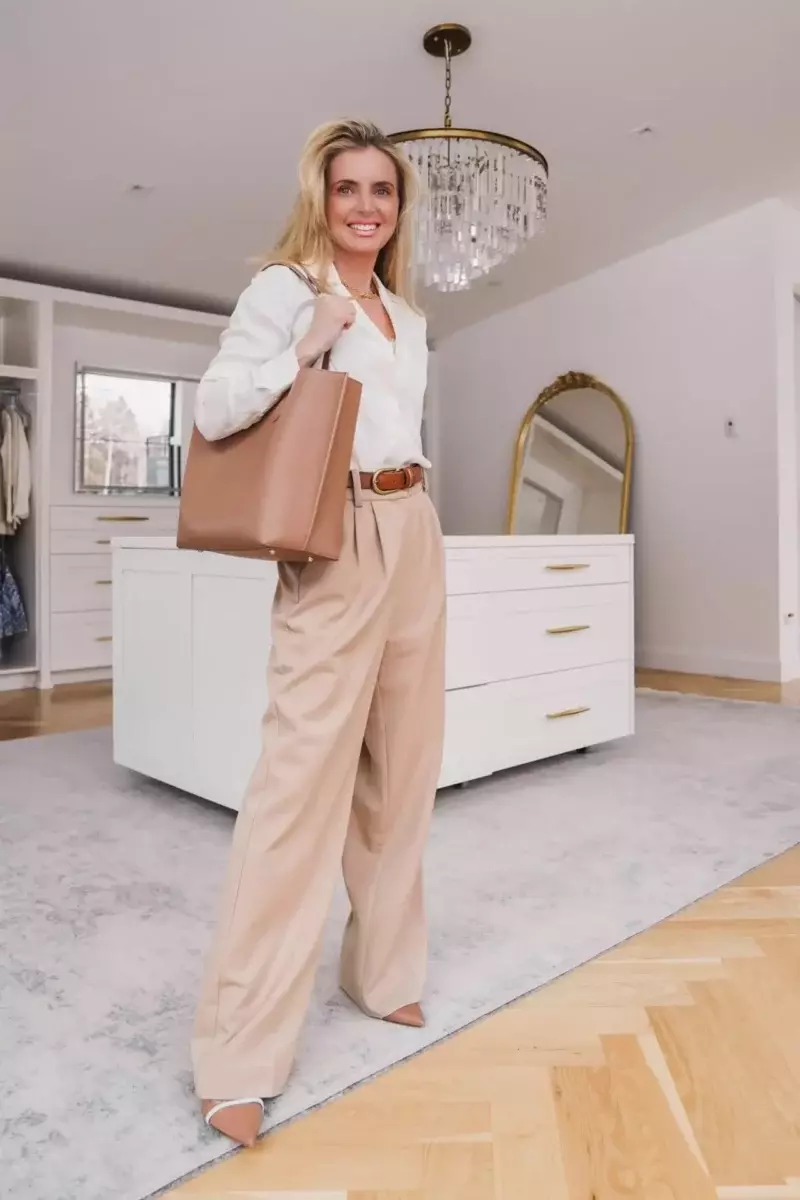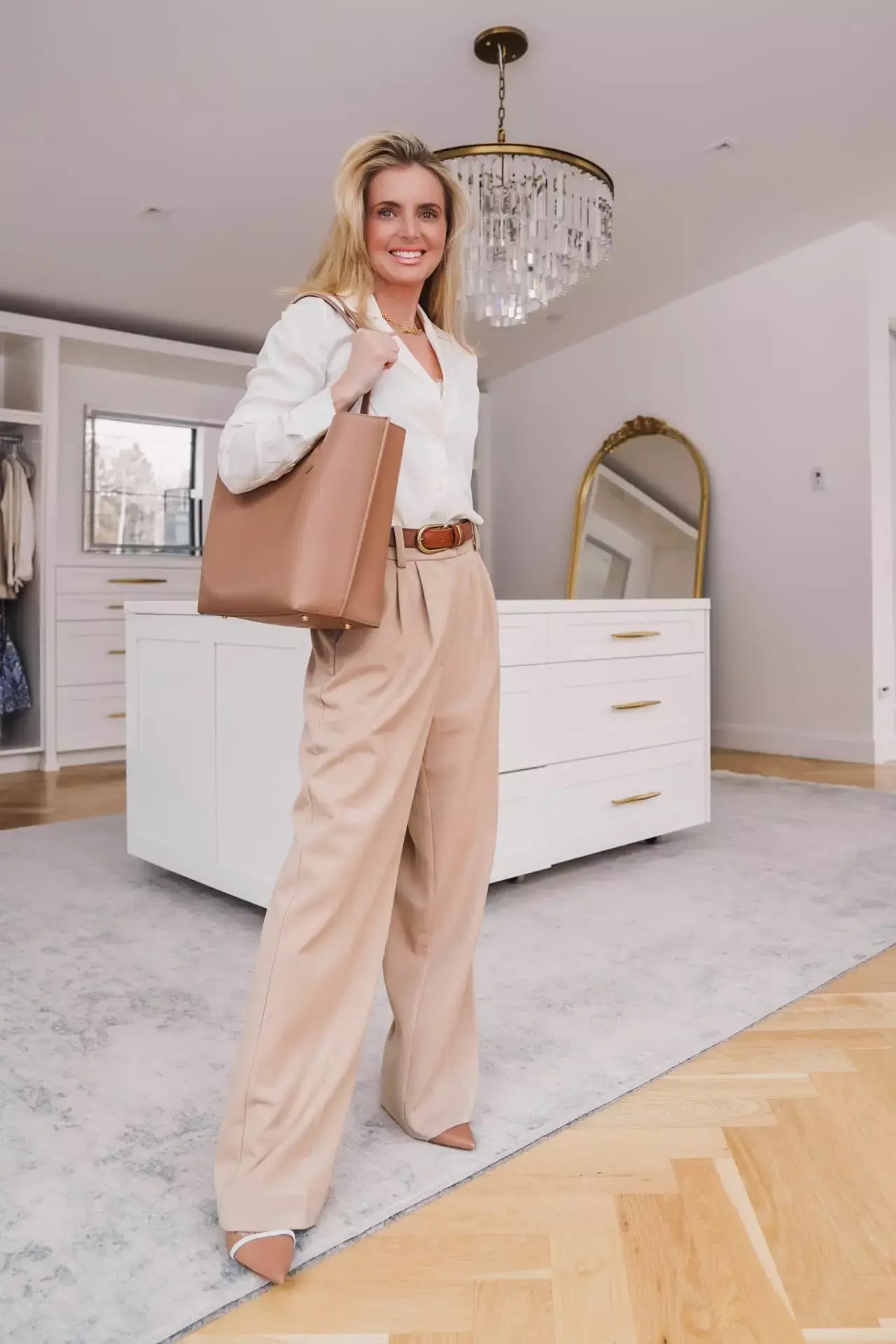
It’s 7:40 on a Monday morning. You’re standing in front of a full wardrobe, coffee going cold, and somehow there is nothing to wear to the office… Too formal feels stiff. Too relaxed feels careless. And “business casual” sounds like it should be the easiest dress code of all.
So why is it the one that trips up the most women?
Because nobody ever handed you the formula. Business casual isn’t a list of allowed clothes; it’s a balance between polish and ease. Once you see that balance, getting dressed takes five minutes instead of twenty.
In this guide, we’ll unpack what business casual really means, break it down into a simple three-part formula, put that formula to work across a full week, and finish with the layer most style guides forget: what goes underneath.
I. Why does business casual feel so confusing?
The trouble starts with the name. “Business” pulls you toward suits and pencil skirts; “casual” pulls you toward jeans and sneakers. You’re asked to live somewhere in the middle, and every office draws that middle line in a slightly different place.
Then there is the shopping problem. Most of us build a work wardrobe one rushed purchase at a time: a blazer for an interview, a blouse for a presentation, trousers bought on sale. The result is a closet full of pieces that were never designed to work together. Sound familiar?
This is how you end up with the two classic business casual mistakes:
- The over-correction. A full suit on a Tuesday when everyone else is in knitwear, so you look like you’re interviewing for your own job.
- The slow slide. Each week gets a little more relaxed until leggings and a hoodie somehow feel acceptable.
Neither one is a style failure. Both are a system failure, and a system is exactly what we’re going to build.
II. What does business casual actually mean?
Forget the long lists of dos and don’ts for a moment. At its heart, business casual asks one question: do you look like someone who can be trusted with an important meeting at a moment’s notice?
That’s it. Not “are you wearing a suit” and not “is your outfit expensive”, but simply whether you look considered, comfortable and ready.
In practice, most business casual offices share the same broad expectations:
- Tailored or neat trousers, skirts and dresses rather than athletic or distressed fabrics
- Tops with some structure or substance: blouses, fine knits, crisp shirts
- A jacket or third layer that can be added when the day calls for it
- Clean, closed or low-key footwear rather than flip-flops or gym trainers
Business casual isn’t about wearing less formal clothes. It’s about wearing formal clothes less formally.
Keep that idea in mind, because it’s the key that unlocks the formula.
III. The formula: Structure + Softness + Polish
Here is the formula that never fails:
One structured piece + one soft piece + one polished finish = business casual.
Every outfit needs all three. Take one away and the balance tips: all structure looks corporate, all softness looks weekend, and no polish looks unfinished.
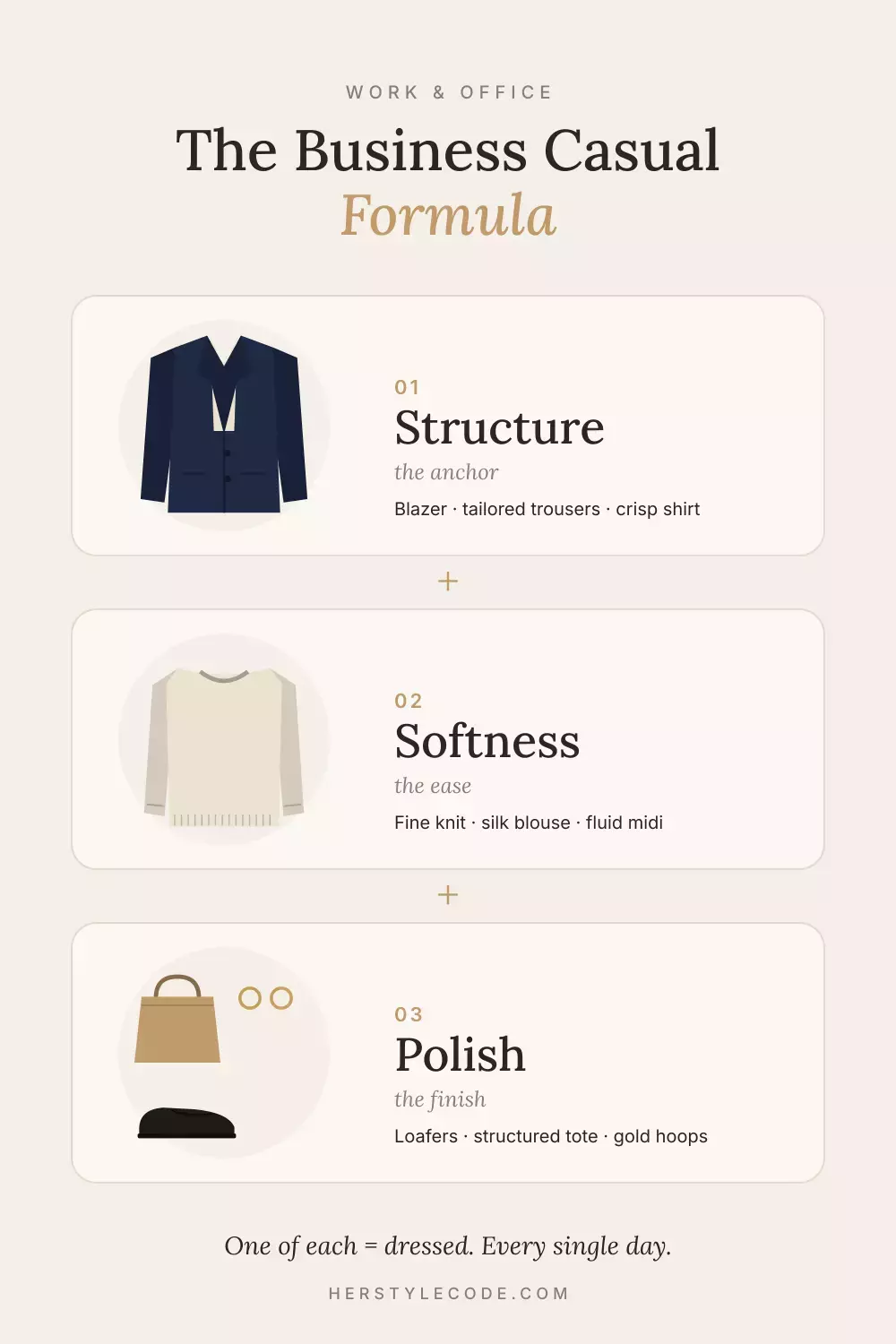
Structure: the anchor
This is the piece that tells people you mean business. It has a clean line and holds its shape on its own.
- A single-breasted blazer in navy, camel, grey or black
- Tailored wide-leg or straight trousers
- A crisp cotton shirt
- A pencil or A-line skirt in a firm fabric
Softness: the ease
This is what keeps you from looking like you’re on your way to court. It drapes, moves and feels good to wear.
- A fine-gauge merino or cashmere knit
- A silk or satin-finish blouse
- A fluid midi skirt
- A knitted cardigan or a jersey dress
Polish: the finish
This is the small detail that pulls everything together, and it’s the part most women skip when they’re in a rush.
- Loafers, low block heels, ballet flats or sleek ankle boots
- A structured tote large enough for a laptop
- One quiet piece of jewellery: small gold hoops, a watch or a fine chain
- A belt that matches your shoes or bag
So, before moving on, here’s the key idea so far: pick one from each column and you’re dressed. A blazer (structure) over a cashmere knit (softness) with loafers (polish). A silk blouse (softness) tucked into tailored trousers (structure) with a slim belt (polish). The combinations are endless, and every one of them works.
IV. The formula in action: one week, five outfits
Theory is lovely, but what does it look like on a real Monday? Here’s how the same formula carries you through a full working week, using roughly a dozen pieces.
Monday: the confident start
A navy blazer, a cream fine-knit crew neck and camel wide-leg trousers, finished with black leather loafers. Monday is for looking organised, even if the inbox says otherwise.
Tuesday: the soft power look
A silk blouse in a soft blush tone tucked into charcoal straight-leg trousers, with a slim belt and small gold hoops. No jacket needed; the trousers do the structural work.
Wednesday: the midweek midi
A fitted black knit with a pleated camel midi skirt and sleek ankle boots. It’s comfortable enough for a long day at your desk and elegant enough for a client lunch.
Thursday: the meeting-ready day
A crisp white shirt under a grey blazer with dark tailored trousers and low block heels. If there’s a presentation on your calendar, this is your outfit.
Friday: the relaxed finish
Dark, clean straight-leg jeans (if your office allows them), a camel cardigan over a striped tee and ballet flats. The jeans are your casual element, so the cardigan and flats keep it polished.
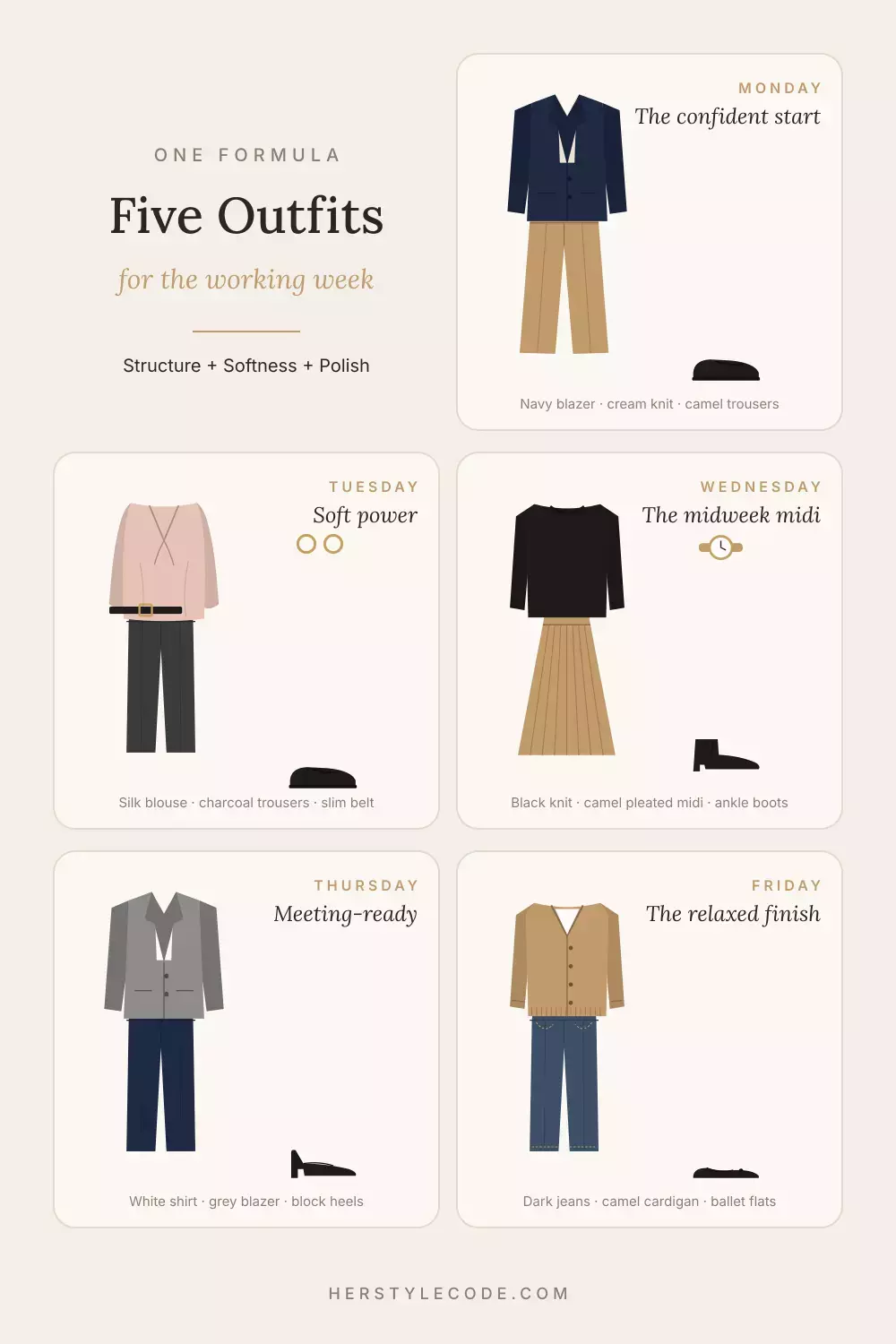
Notice what happened? Twelve-ish pieces, five completely different outfits, and not one of them required a second thought.
That’s the quiet magic of a formula: it turns getting dressed from a daily decision into a simple habit.
V. The foundation nobody sees
Here’s the part most office style guides leave out. You can follow the formula perfectly and still feel “off” all day, and the reason is usually what’s underneath.
A beautiful silk blouse loses all its polish when a lace bra shows through it. Tailored trousers look less tailored with visible lines. A fine knit clings in all the wrong places without the right layer beneath it. The best work outfits start with the pieces no one will ever see.
Build your base layer with the same care as your outfit:
- A smooth T-shirt bra in your skin tone. Not white, which shows through light fabrics, but a shade close to your own skin. It disappears under silk, cotton shirting and fine knits.
- Seamless, laser-cut briefs. These are essential under tailored trousers and fitted skirts, where every line shows.
- A fine camisole or bodysuit. It sits under sheer blouses and lightweight knits, smooths the silhouette and saves your outer layers from wear.
- A slip for skirts and dresses. A half-slip stops unlined skirts from clinging to tights and keeps fluid midis hanging the way they should.
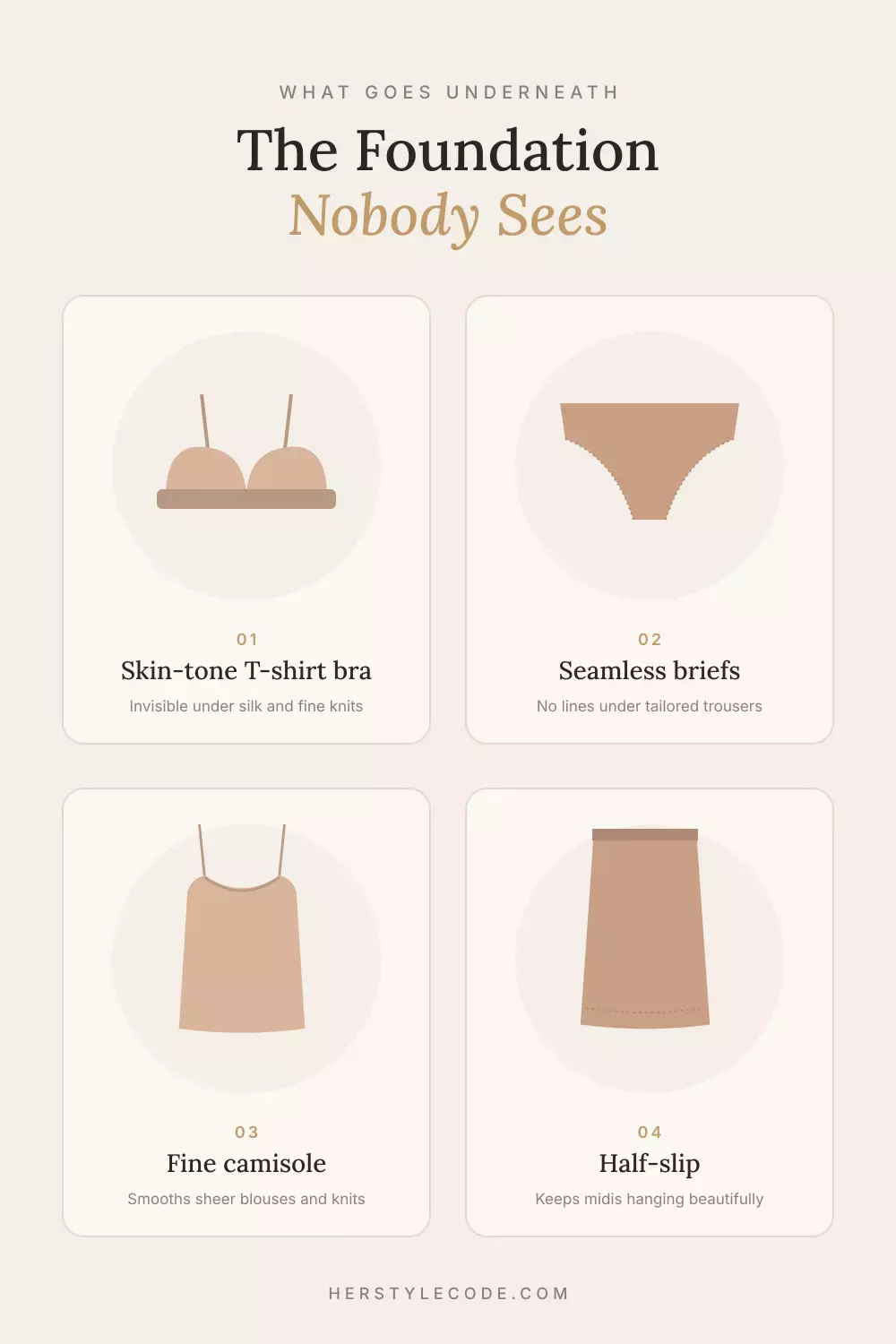
Think of these as the quiet partner to the formula. Structure, softness and polish happen on the outside; a smooth, invisible base makes all three look the way they’re supposed to.
VI. What to leave at home
A formula is only as strong as its boundaries. Even in the most relaxed office, a few pieces tend to undo all your good work:
- Anything with visible wear. Pilled knits, faded black trousers and scuffed shoes undermine an otherwise perfect outfit.
- Athletic fabrics. Leggings, joggers and technical sportswear belong at the gym, however comfortable they are.
- Too much at once. A statement print, statement earrings and a statement shoe compete for attention. Pick one.
- Fit that’s “almost right”. A blazer with sleeves past your knuckles or trousers pooling at the ankle will always look careless. A quick visit to a tailor is the cheapest upgrade in fashion.
Would you rather be remembered for your outfit or for your ideas in the meeting? The right business casual look makes sure it’s the second one.
So here’s your takeaway: structure, softness, polish, and a smooth foundation underneath. Learn it once and you’ll never stand in front of your wardrobe on a Monday morning wondering what to wear again.
If you’d like to take the guesswork out of colour too, download our free colour-season guide and subscribe to Her Style Code for new outfit formulas every week.