Celebrity Styles
The Screen Deception: Why Your Phone’s Color Temperature is Altering Your Hair Color Reality
Imagine this scenario: You are scrolling through a beauty blog or Instagram late at night, and you stop dead in your tracks. You have found the absolute perfect hair color. It is a stunning, dimensional brunette with the most beautiful, subtle caramel warmth. The caption or the article even graciously provides the exact brand and formula the stylist used. Thrilled, you save the photo, book an appointment with your trusted hairstylist, and present the picture along with the exact color formula.
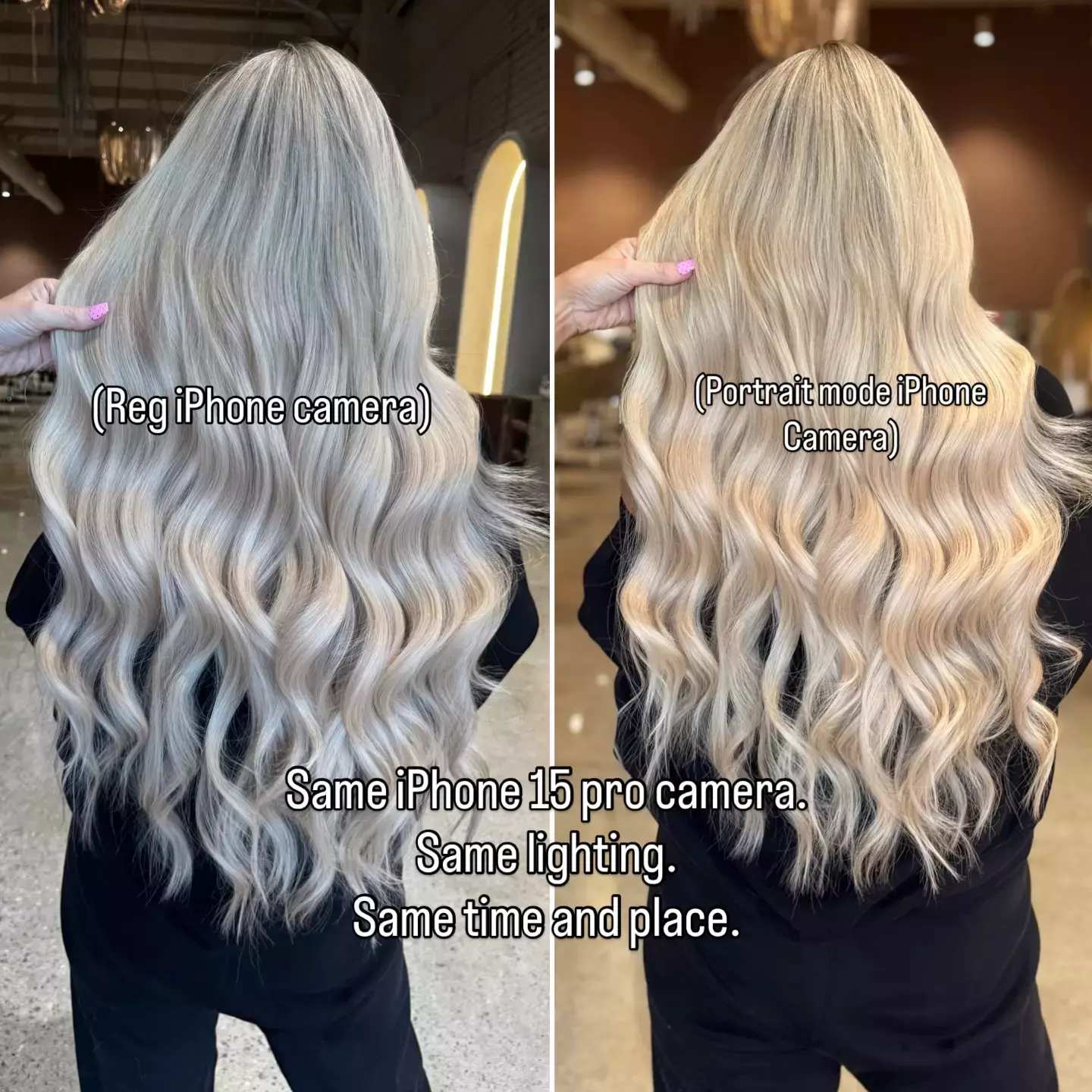
A few hours later, the stylist turns your chair toward the mirror. The color is beautiful, and it matches the formula precisely—but it is not the color you fell in love with on your phone. The real-life result looks cooler, flatter, and lacks that magical golden glow you saw on your screen. You feel disappointed, and your stylist feels confused.
Who is to blame here? Is it the stylist’s technique? Was the formula in the article wrong? In reality, the culprit is something much more insidious and ubiquitous: your smartphone’s screen, specifically its color temperature.
In the digital age, the gap between what we see on a screen and what exists in reality is widening. For the hair and beauty industry, this technological discrepancy is causing a crisis of expectations. To understand why your dream hair color got lost in translation, we must dive into the science of digital displays, the biology of human vision, and the vital communication necessary between a client and a hairstylist.
The Physics of Digital Displays and Color Temperature
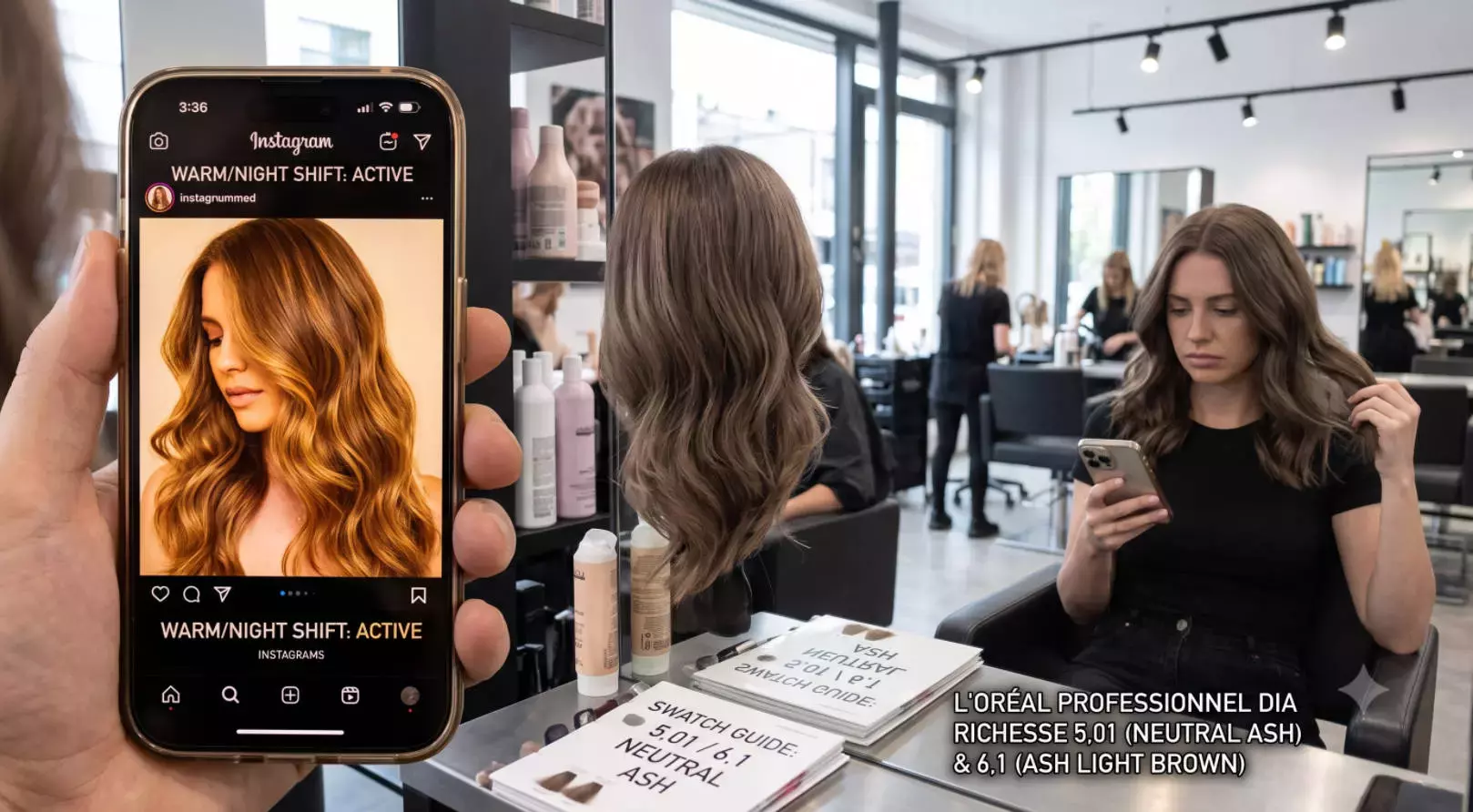
To understand the disconnect between your screen and reality, you first need to understand how devices display color. Every digital screen—whether it is a high-end desktop monitor, an iPhone, or an Android tablet—uses millions of tiny pixels emitting Red, Green, and Blue (RGB) light to create the images you see. However, not all screens are calibrated equally.
The overall tint of a screen is governed by its “color temperature,” a metric measured in Kelvins ($K$). In physics, color temperature refers to the color of light radiated by an idealized opaque, non-reflective body at a given temperature.
- Cooler Temperatures: Screens calibrated to a higher Kelvin number (typically around $6500K$ and above) emit a cooler, bluish-white light. This is standard for most factory settings because it appears brighter and crisper to the human eye, mimicking midday sunlight.
- Warmer Temperatures: Screens calibrated to a lower Kelvin number (around $5000K$ or below) emit a warmer, yellowish, or reddish light, resembling the glow of a sunset or a traditional incandescent light bulb.
Here is where the problem begins. Most modern smartphones have built-in features designed to protect your eyes from blue light, which is known to cause eye strain and disrupt sleep patterns. Apple has “Night Shift” and “True Tone,” while Android devices have “Eye Comfort Shield” or “Blue Light Filter.” When these features are activated, the device artificially lowers the color temperature of the screen, pulling a heavy, warm, amber-tinted veil over everything you are looking at.
The Scenario: The “Warm Screen” Illusion

Let us revisit the scenario mentioned at the beginning. You are looking at a photo of a hair color on a phone that has a warm color temperature setting active. Perhaps it is late evening, and your phone has automatically shifted into Night Shift mode, heavily tinting your screen with amber hues.
You are looking at a picture of a neutral, medium-brown hair color. But because your screen is projecting a warm filter over the image, your eyes perceive it as a rich, glowing, warm chestnut brown. You fall in love with this specific shade of chestnut. You read the article, which states the exact dye model used (for example, a Level 5 Neutral Brown).
You go to the salon and request the Level 5 Neutral Brown, showing the stylist the picture on your warm screen. The stylist, trusting the formula provided in the article and matching it to their professional knowledge, mixes and applies the exact dye.
When the hair is washed and dried, you look in the salon mirror under the bright, neutral, or slightly cool daylight bulbs of the salon. The hair is exactly what the formula dictated: a Level 5 Neutral Brown. But because you are looking at it in reality—without the amber filter of your phone’s Night Shift mode—the hair lacks the red and gold undertones you expected.
The color in the article was accurate. The formula was accurate. The stylist’s execution was accurate. But the digital filter on your device created a phantom color that never actually existed in the real world.
The Multi-Device Phenomenon: No Two Screens are Alike
The complication does not stop at eye-comfort settings. Even if you turn off Night Shift and True Tone, the exact same image will look fundamentally different across various devices due to hardware variations.
If you were to open the exact same reference photo of a hair color on an Apple iPhone OLED screen, a Samsung Galaxy AMOLED screen, and a standard Dell LCD desktop monitor, you would see three distinct hair colors.
Samsung displays are notoriously calibrated to be hyper-saturated, making colors pop with intense vibrancy. Reds look redder, and contrasts are stark. Apple screens tend to aim for color accuracy, but their True Tone technology constantly shifts the screen’s white balance based on the ambient light in your physical room. A standard LCD monitor might look slightly washed out or cooler by comparison.
Therefore, when a stylist looks at a client’s phone, they are not seeing the “true” image. They are seeing an image filtered through that specific manufacturer’s hardware calibration, altered by the user’s brightness settings, and further distorted by any ambient light sensors. If a client sends a photo to the stylist’s phone ahead of time, the stylist might be looking at a completely different hue than the client is.
The Light Emitting vs. Light Reflecting Divide
There is another scientific hurdle in this process: the difference between additive and subtractive color.
Your smartphone screen is an additive color system. It emits light directly into your eyes. Hair, on the other hand, operates on a subtractive color system. Hair does not emit light; it reflects the ambient light around it.
When you look at a hair color on a bright screen, you are looking at backlit, glowing pixels. The color appears luminous, multidimensional, and intensely shiny because light is literally shining through the image.
When you dye your hair, the final result is entirely dependent on the physical lighting of the room you are in. A hair color will look vastly different under the fluorescent lights of an office building, the warm incandescent bulbs of a living room, and the direct, cool sunlight of the outdoors. You can never achieve the exact backlit luminosity of a digital screen on physical, human hair. Expecting hair to glow like an OLED display sets both the client and the stylist up for failure.
The Hairstylist’s Responsibility: Establishing the Baseline
Because digital screens are inherently deceptive, hairstylists must adapt their consultation processes. It is no longer enough to simply look at a client’s phone, nod, and go mix the bleach and dye. The modern stylist must act as a digital translator, establishing a single source of truth before any chemicals touch the client’s head.
1. Acknowledging the Screen Variance
The first step is education. When a client presents a photo on their phone, the stylist should actively explain the concept of screen variance. A simple script works best: “This is a gorgeous color, but before we proceed, I want to make sure we are seeing the exact same thing. Phone screens often change how hair color looks.”
2. Finding the “True Color”
The stylist must establish a baseline. This can be done in a few ways:
- The Device Swap: The stylist can ask the client to send the photo to the salon’s iPad or the stylist’s phone, ensuring they are both looking at the image on a device the stylist is familiar with.
- Turning Off Filters: The stylist should politely ask to temporarily disable True Tone, Night Shift, or any blue-light filters on the client’s phone to reveal the image’s true temperature.
- Physical Swatches: This is the most crucial step. The stylist should bring out the physical hair color swatch book. They must hold the physical swatches next to the client’s screen and ask, “Which of these physical swatches matches what you love about this digital photo?”
By forcing the client to choose a physical, tangible swatch, the stylist completely removes the phone screen from the equation. The physical swatch becomes the new contract. If the client points to a warm, golden-brown swatch, the stylist now knows the goal—even if the article the client read claimed a “neutral” dye was used.
3. Decoding the “Why”
Stylists must ask clients what they like about the photo. Instead of accepting the photo as a literal blueprint, they should ask, “Do you like how warm the ends are? Do you prefer the darker root? Are you drawn to the golden tones, or do you prefer it more ashy?” This verbal confirmation bridges the gap between what the client’s brain is processing and what the screen is showing.
How Clients Can Protect Their Hair Goals
Clients also bear responsibility in this digital age. If you want to ensure you leave the salon happy, you must change how you source and present your inspiration photos.
First, whenever you are searching for hair color inspiration, ensure your device’s screen is as neutral as possible. Turn off True Tone, Night Shift, and Eye Comfort modes. Turn your brightness all the way up. This will give you the most accurate representation of the photo as the photographer or author intended it.
Second, do not rely on a single photo. If you love a specific color you saw in an article, try to find a video of that same hair, or photos of the same person in different lighting (indoors versus outdoors). This will give your brain a more realistic composite of how the color behaves in the physical world.
Third, let go of the exact formula. Just because an article states that a stylist used a specific combination of dyes does not mean that exact combination will yield the same result on your head. Your starting hair color, your hair’s porosity, its underlying pigment, and previous chemical treatments will all drastically alter how the dye processes. Trust your stylist to formulate the color based on your specific hair chemistry to achieve the visual result you want, rather than demanding they use the exact chemical formula you read online.
Technology has given us unprecedented access to beauty inspiration. With a few taps, we can curate boards filled with incredible styles from around the world. However, we must remember that our screens are presenting a highly filtered, illuminated, and variable version of reality.
A hair color formula written in an article is merely a recipe, and the photo on your phone is just a digital projection altered by the color temperature of your specific device. By understanding how our screens deceive us—and by prioritizing clear communication and physical color swatches in the salon—both clients and stylists can navigate the digital illusion and achieve beautiful, real-world results. The next time you find the perfect color online, remember: the truest reflection is not the one on your screen, but the one in the salon mirror.